
History Is More Than Facts: Creating Space for Curiosity in the Classroom

This month, we invited Mr. Marvin to share a glimpse into his history classroom and his approach to creating meaningful learning experiences for students. From lively conversations about the Code of Hammurabi to students bringing mythology to life through creative projects, Mr. Marvin shares how history can become much more than learning facts and dates. His reflection gives us a look at what happens when students are encouraged to ask questions, explore different perspectives, and find their own ways to connect with the past.
We’re excited to share his perspective as part of our Teacher Guest Writer series and give our community a closer look at learning inside Colossal Academy.
History as a Story
One of the things I hope students learn in my classes is that history is more than just facts and events. History is made up of stories about people living their lives during extraordinary times. When students have opportunities to explore those stories, ask questions, and form their own opinions about what happened, they begin to understand that there are many lessons we can learn from those who have walked the path before us.
Asking Bigger Questions About the Past
One moment that stands out to me happened in our 6th Grade World History class while we were studying the Code of Hammurabi. The students had a lively discussion about the merits of Hammurabi’s approach to law and order, particularly the idea of “an eye for an eye.” There were varying opinions in the classroom. Some students thought that having such strict consequences could have helped create a safer and more orderly society, while others felt that the punishments were unnecessarily harsh.
I enjoyed seeing students think through the question rather than simply learning what the Code of Hammurabi was. The discussion gave them an opportunity to consider ideas about fairness, justice, consequences, and what makes a society safe. It also allowed them to hear perspectives that were different from their own. Those types of conversations are an important part of learning history because students are not only learning what happened in the past, but thinking about why people made certain decisions and what we can learn from them today.
Giving Students the Freedom to Create
Creativity is another important part of the way students experience history in my classroom. One project that students particularly enjoy is the mythology project in 6th Grade World History. Students have the opportunity to research a mythological hero, creature, god, or goddess and then decide how they would like to present what they have learned. I think students enjoy the project because it gives them the freedom to be creative across different mediums. Some may choose a poster or another visual presentation, while others may decide that a video is the best way to communicate their ideas.
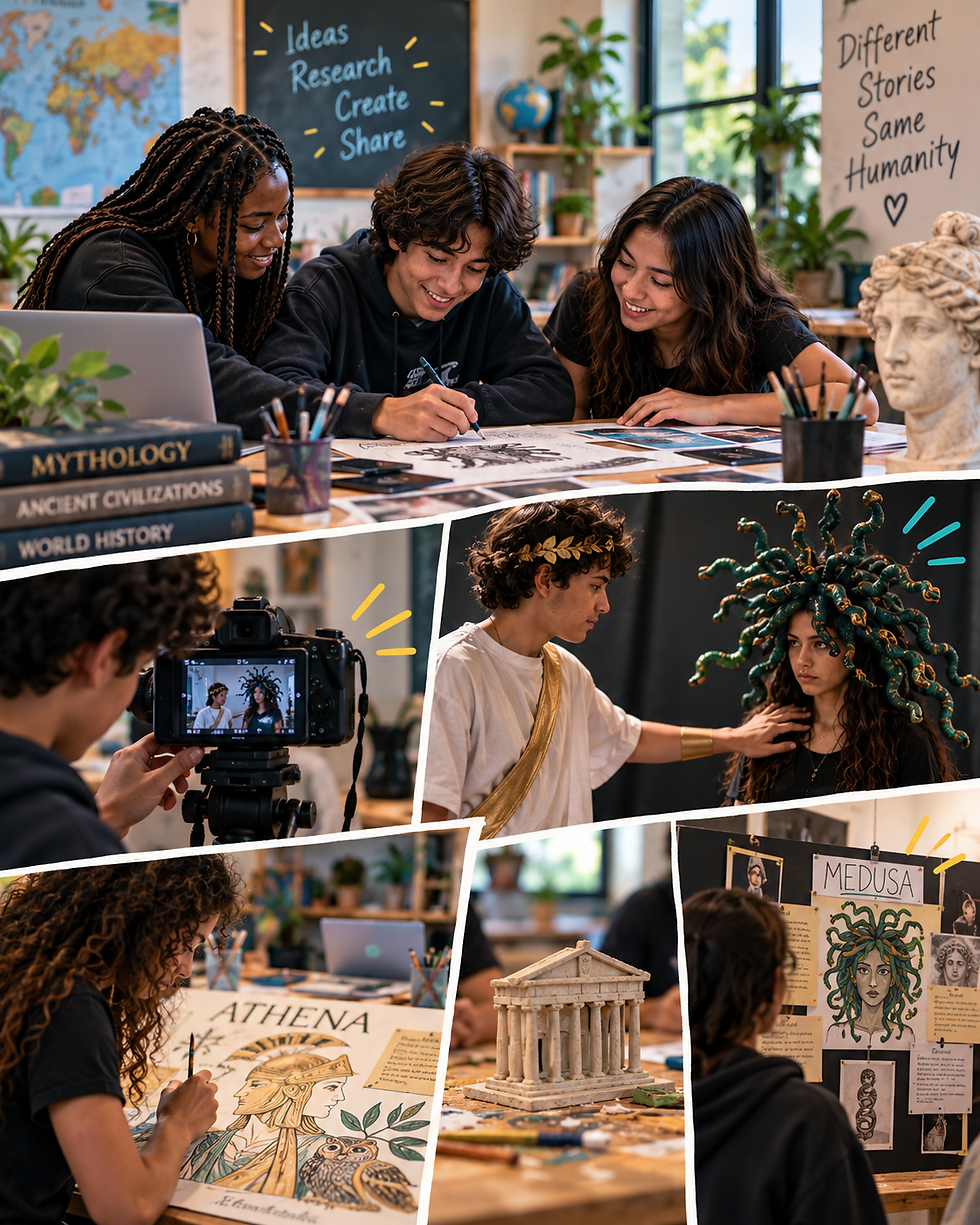
Last year, for example, two students chose to create a video reenacting the origin story of Medusa, the legendary Gorgon. It was very clear that they had taken the time to plan their project. They developed a script, wore costumes, acted out the story, and edited the video before sharing it. They were learning about mythology, but they were also practicing research, planning, communication, collaboration, and creative expression. Most importantly, they had taken ownership of the project and found a way to make the material meaningful to them.
Learning Through Different Modalities
I think experiences like this are a testament to the educational philosophy of Colossal Academy. Teachers are supported in exploring student creativity through different modalities, and students are given opportunities to demonstrate their learning in ways that work for them. Not every student is going to connect with material in exactly the same way, and not every student needs to demonstrate understanding through the same type of assignment. Giving students different ways to engage can allow us to see abilities and interests that may not always come through in a traditional assignment.
Meeting Students Where They Are
That same idea of flexibility is important when designing learning experiences for students academically and emotionally. I try to begin by understanding where students are and then adjust the pace, level of support, and ways they can engage with the material. I see this as an ongoing process of noticing, listening, and responding to what each learner needs.
Sometimes that means providing additional support, while at other times it means giving a student more independence or another way to approach an assignment. Creating space for choice, connection, and reflection can help students feel supported as they work toward their academic goals.
Staying Curious Alongside My Students
My students have also reminded me this year that curiosity and learning are truly lifelong endeavors. Their questions, perspectives, and willingness to explore new ideas have often challenged me to look at familiar subjects in new ways. As a teacher, it can be easy to think about what we hope our students will learn from us, but learning goes in both directions. Every day, my students remind me to remain curious, continue asking questions, and stay open to discovering something new.
More Than Something to Memorize
Ultimately, that is what I hope students take away from my history classes. I want them to understand the important people, places, events, and ideas we study, but I also want them to remain curious about the people behind those events. History gives us an opportunity to look at how people responded to challenges, how societies developed, and how decisions made in one time period can continue to influence another.
When students are able to discuss those ideas, question them, and explore them creatively, history becomes more than something they are expected to remember for a class. It becomes another way for them to better understand people, the world around them, and their own place within it.


Comments