
Why AI Literacy Matters for Students in Today’s World
Artificial intelligence is already shaping how we learn, work, communicate, and solve problems. From search engines to creative tools, students interact with AI every day — often without realizing it.
That’s why AI literacy is quickly becoming one of the most important 21st-century skills for students. Families across South Florida and beyond are asking an important question: How can students learn to use AI responsibly, creatively, and confidently?
In this guide, we’ll break down what AI literacy means, why it matters, and how learner-centered schools can help students thrive in an AI-powered future.
What Is AI Literacy?
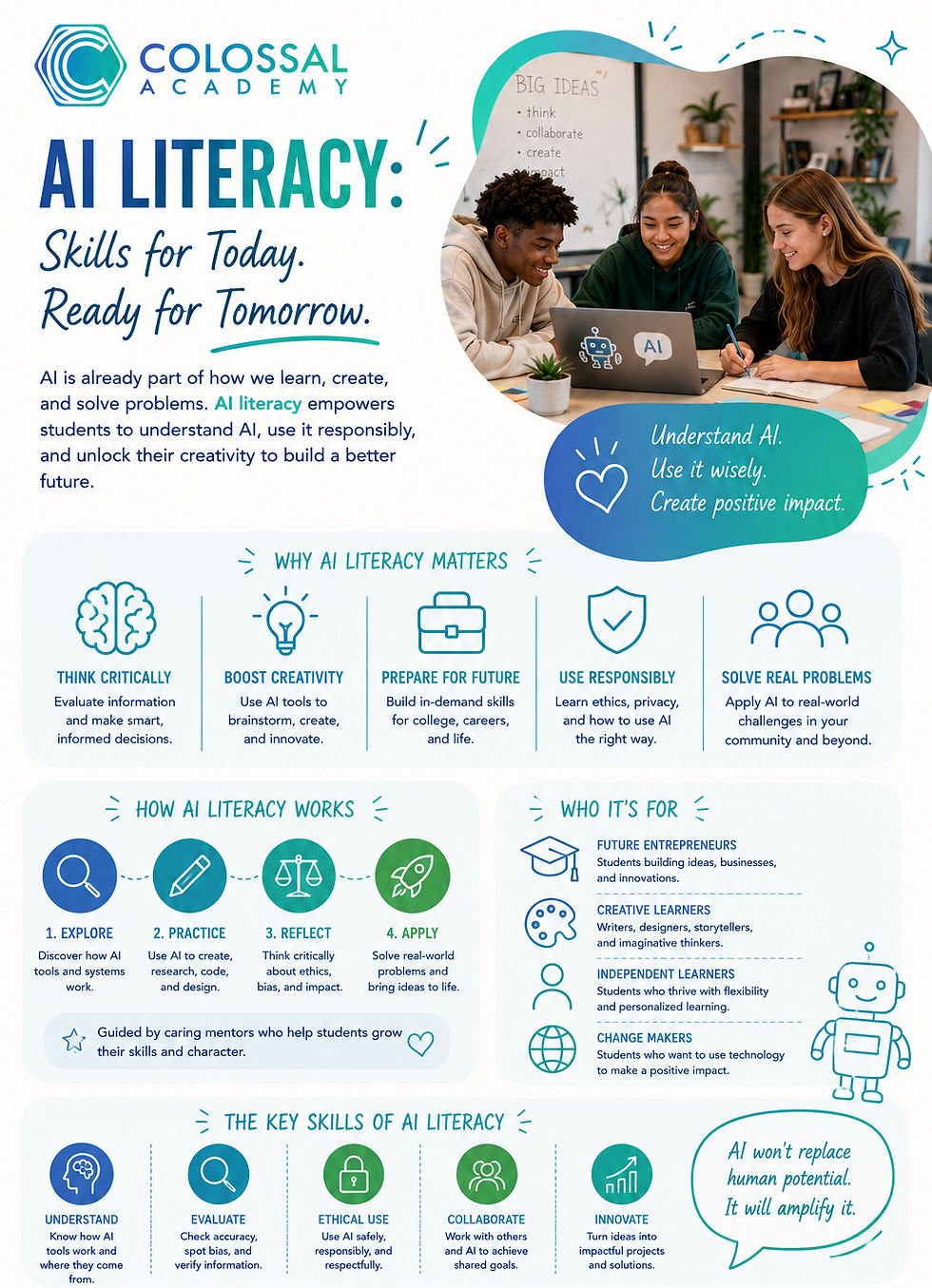
AI literacy is the ability to understand, evaluate, and responsibly use artificial intelligence tools and technologies.
It goes beyond simply knowing how to use ChatGPT or other AI platforms.
True AI literacy helps students:
Think critically about information generated by AI
Use AI ethically and responsibly
Solve real-world problems creatively
Understand how technology impacts society
Develop adaptable future-ready skills
As AI becomes more integrated into education and careers, students who understand how to work with AI — instead of fearing it — will have a major advantage.
Key Benefits of AI Literacy for Students

Better Critical Thinking Skills
AI tools can generate answers quickly, but students still need to evaluate accuracy, bias, and reliability. AI literacy teaches learners how to ask better questions and think independently.
Stronger Creativity and Innovation
When used well, AI can support brainstorming, storytelling, coding, design, research, and entrepreneurship. Students learn how to turn ideas into action using modern tools.
Future Career Readiness
Many industries now expect employees to understand AI-assisted workflows. Early exposure helps students build confidence with emerging technologies and prepares them for future careers.
Responsible Digital Citizenship
AI literacy also includes ethics, privacy, misinformation awareness, and healthy technology habits. These are essential life skills in today’s digital world.
Personalized Learning Opportunities
AI tools can help students learn at their own pace, explore passions deeply, and receive individualized support — especially in flexible learning environments like microschools and hybrid programs.
How AI Literacy Works in Modern Education
The best AI education programs focus on active learning rather than passive technology use.
Here’s what effective AI literacy often looks like in learner-centered schools:
Students Learn How AI Tools Function
Learners explore how AI systems generate content, make predictions, and process information.
Students Practice Real-World Applications
Students may use AI for:
Research projects
Business ideas
Creative writing
Coding experiments
Community problem-solving
Entrepreneurship projects
Teachers Guide Ethical Use
Responsible use matters. Students learn:
When AI is helpful
When human thinking matters most
How to cite or verify AI-generated information
How to avoid overreliance on technology
Students Build Human Skills Alongside Technical Skills
Communication, empathy, leadership, creativity, and collaboration remain essential — even in an AI-driven world.
Families interested in future-ready learning models can explore our flexible online program here: [ONLINE_PROGRAM_URL]?utm_source=blog&utm_medium=article&utm_campaign=ai-literacy-for-students
Who Is AI Literacy Good For?
AI literacy benefits many types of learners, including:
Students interested in technology or entrepreneurship
Creative learners who enjoy design, media, or storytelling
Independent learners seeking flexible education
Students preparing for modern careers
Families looking for innovative alternatives to traditional school
Learners who thrive in project-based or personalized education models
AI literacy is not just for future programmers. It’s becoming a foundational skill for nearly every field.
AI Literacy vs Traditional School Approaches
Many traditional schools are still figuring out how to respond to AI technology. Learner-centered models often adapt more quickly because they emphasize innovation and flexibility.
Traditional School Models Often:
Focus heavily on memorization
Restrict AI tools entirely
Offer limited real-world technology integration
Prioritize standardized outcomes
AI-Literate Learning Models Often:
Teach responsible AI use
Encourage critical thinking and creativity
Integrate project-based learning
Help students adapt to changing technologies
Emphasize future-ready skills
For many families in Fort Lauderdale and South Florida, this shift toward personalized, future-focused learning is becoming increasingly important.
Common Questions About AI Literacy
Is AI literacy important for younger students?
Yes. Even younger students interact with AI through apps, search engines, and digital tools. Age-appropriate AI literacy helps students build healthy technology habits early.
Does AI replace critical thinking?
No. Strong AI literacy actually strengthens critical thinking because students learn how to evaluate, question, and verify information.
Can AI help students become more creative?
Absolutely. AI can support brainstorming, design, storytelling, coding, and innovation when used thoughtfully.
Will AI literacy help students prepare for future careers?
Yes. Many industries already use AI-assisted tools. Students who understand how to work with AI responsibly may have a strong advantage in the future workforce.
How can parents support AI literacy at home?
Parents can encourage curiosity, discuss responsible technology use, and help students ask thoughtful questions about the information they encounter online.
Conclusion
AI is changing education, careers, and everyday life. Instead of avoiding these changes, students can learn how to navigate them with confidence, creativity, and responsibility.
AI literacy helps young people become thoughtful problem-solvers, ethical digital citizens, and adaptable lifelong learners.
Interested in exploring a more future-ready learning experience?
Learn more about our flexible online program here:


Comments